Automotive Industry
Automotive Fastener Solutions for Sheet Metal, Trim, and Bracket Assembly
Automotive fastening parts are usually small, but they often affect whether an assembly point can be installed quickly, locked securely, removed for service, and kept stable during mass production.
For vehicle body sheet metal, interior and exterior trim, bumpers, radiator grilles, lamp brackets, wire harnesses, plastic parts, and support brackets, MSf provides metal stamped fasteners that can be selected or customized according to the actual assembly condition.
Instead of treating fasteners only as standard parts, MSf reviews how the part will be installed. Plate thickness, hole size, assembly direction, screw engagement, clamping force, removal requirement, material, and surface treatment all affect whether the fastening design is suitable for production.
Common Fastening Challenges in Automotive Assembly
In automotive assembly, fastening problems are often discovered only after the part enters trial assembly or mass production. A fastener may look simple on the drawing, but its performance can be affected by plate thickness, hole tolerance, screw engagement, assembly direction, surface treatment, and service removal requirements.
If the fastener is not matched to the actual assembly condition, it may cause unstable clamping force, difficult installation, poor screw engagement, part damage during removal, or inconsistent fastening performance during production.
Before moving into production, the following points should be reviewed:
● Whether the fastener can be installed smoothly on the production line
● Whether the clamping force matches the plate thickness and hole design
● Whether the screw engagement remains stable at the fastening position
● Whether the part can be removed for service without damaging the surrounding component
● Whether the surface treatment is suitable for the operating environment
● Whether mechanical testing reports or automotive project documents are required
MSf supports these evaluations through stamping design experience, mechanical performance testing, quality documentation, and mass-production control.
Fastener Selection by Assembly Area
Sheet Metal and Bracket Fastening
For body sheet metal, lamp brackets, bumper mounting points, engine compartment sheet metal, and support brackets, the fastening point often needs stronger screw engagement and stable torque performance.
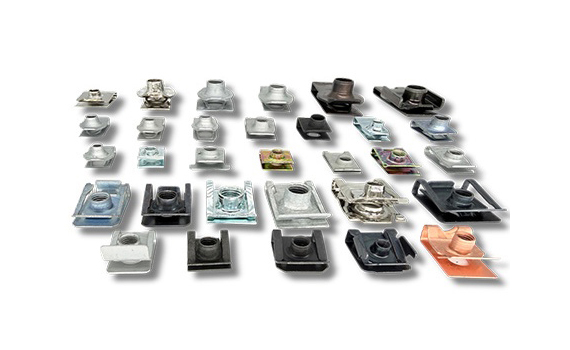
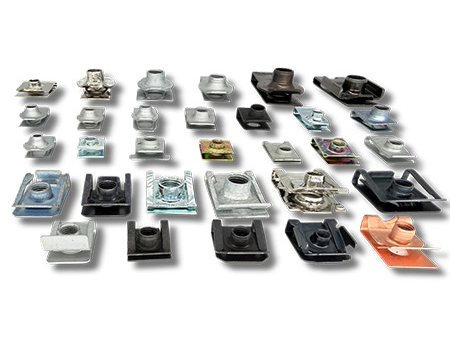
Extruded U-Nuts are commonly used when the application requires more thread engagement than a basic single-thread structure. The extruded hole design can help improve fastening strength and provide a more stable locking condition for screw assembly.
Single-Thread U-Nuts may be used for thinner sheet metal, light-load fastening points, plastic brackets, interior trim panels, and bumper covers where fast installation and basic fastening stability are more important than long thread engagement.
Plastic-to-Metal Assembly
For radiator grilles, bumper brackets, lamp mounting seats, plastic trim panels, and sheet-metal-to-plastic assembly areas, the fastening part must provide a reliable screw point without making the assembly process too complex.
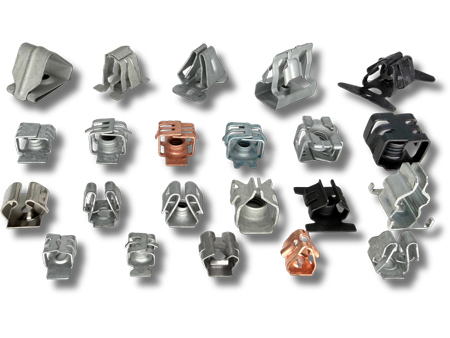
Clip Nuts can be clipped directly onto sheet metal or plastic components. This makes them suitable for assembly points that require positioning, screw fastening, and later maintenance removal.
Edge Fixation Without Additional Drilling
In some areas, adding extra holes may increase processing cost or complicate assembly. Edge Clips can use the edge of sheet metal or plastic components as the fixing position.
They are often used around door edges, engine compartment sheet metal edges, inner bumper areas, wheel arch areas, and body brackets to secure wire harnesses, pipes, covers, or related parts.
Interior and Exterior Trim Assembly
For door trim panels, A/B/C pillar trims, dashboard trim parts, luggage compartment trims, door sill trims, and exterior moldings, the fastener must hold the part securely while still allowing installation and service removal.
Trim Clips are used for these appearance-related parts, where holding force, installation feel, removal condition, and surface stability all matter. MSf can review the clip structure based on the trim material, installation direction, and required serviceability.
Custom Review for Non-Standard Fastening Requirements
Some automotive assembly points cannot be solved by standard fasteners. When the project involves a special bracket, retaining feature, clamping direction, or anti-loosening requirement, MSf can develop customized stamped fasteners based on drawings, samples, or actual assembly conditions.
Depending on the requirement, the part may be designed for clamping, snap-in assembly, positioning, retaining, screw fastening, or combined functions.
Testing and Documentation Support
For automotive fastener projects, MSf can provide mechanical performance testing according to customer requirements, including insertion force, pull-out force, prevailing torque, proof load, and other fastening-related tests.
These test items help confirm whether the selected or customized fastener is suitable for the real assembly condition before mass production.
MSf also supports automotive quality and documentation requirements, including ISO 9001, IATF 16949, ISO 17025 laboratory capability, VDA PSCR, APQP, and PPAP Level 3 documentation when required by the project.
Material, Surface Treatment, and Production Review
Material and surface treatment are also part of the fastening decision. MSf can assist in reviewing carbon steel, stainless steel, spring steel, copper, and other material options according to strength, forming, corrosion resistance, and application needs.
Surface treatment options such as zinc plating, phosphate coating, e-coating, or other finishes can be evaluated based on the installation environment and durability requirement.
Before production, MSf can also review tooling feasibility, stamping process, inspection points, and mass-production stability to reduce development risk.
Discuss Your Automotive Fastener Requirement
To help MSf review your fastening requirement, please provide drawings or samples when available. Information such as plate thickness, hole size, material, screw specification, assembly direction, surface treatment, removal requirement, and expected testing items will help the team suggest a suitable stamped fastener solution for development and mass production.
- Related Products
Extruded U-Nuts
Professional Extruded U-Nuts — Integrating Localized Drawing and Multi-Stage Forming for Automotive Sheet Metal and Plastic Panel Assembly. Our U-nuts...
Details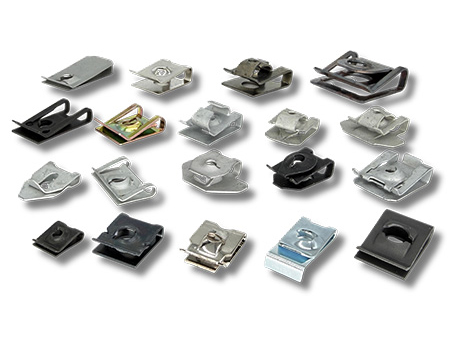
Single-Thread U-Nuts
Our single-thread U-nuts are specifically engineered for general machinery enclosures, industrial control panels, and automotive protective shields requiring...
Details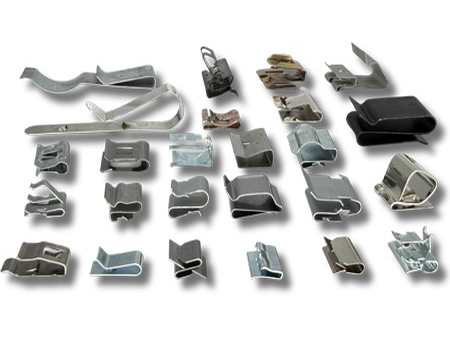
Edge Clips
Our edge clips are expertly engineered for various enclosures, panel borders, and wire routing applications. Utilizing advanced precision stamping and progressive...
Details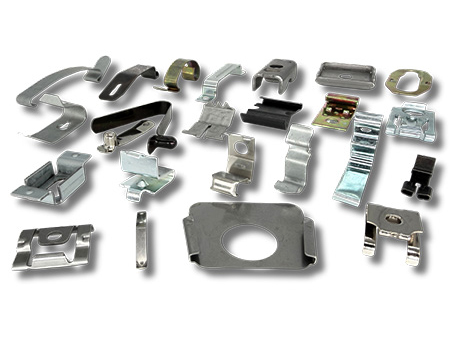
Fastener Clips
Our fastener clips are meticulously designed for various enclosures, panel interlocking, and wire management applications, aiming to provide a completely...
Details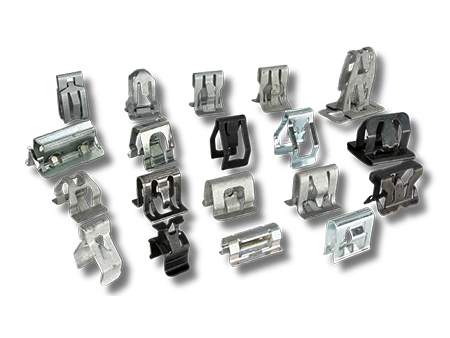
Trim Clips
Our trim clips are meticulously engineered for exterior trim, machinery protective hoods, and interior panels across various industries, providing a completely...
Details