Electronics Industry
Stamped Fastener Solutions for Electronic Devices, Enclosures, and Internal Assembly
Electronic fastening parts are usually small, but they often affect whether an electronic device can be assembled efficiently, fixed securely, serviced easily, and kept stable during mass production. In electronic equipment, a fastening point may need to support screw fastening, panel fixation, edge holding, grounding contact, light-load clamping, or repeated removal for maintenance.
For electronic devices, equipment enclosures, control modules, internal brackets, removable covers, small panels, and grounding points, MSf provides metal stamped fasteners that can be selected or customized according to the actual assembly condition. These fasteners help solve common issues such as insufficient thread engagement, limited installation space, hole misalignment, unstable clamping, and the need to avoid welding, riveting, or additional processing.
Instead of treating fasteners only as standard parts, MSf reviews how the part will be installed in the final product. Plate thickness, hole size, assembly direction, screw engagement, tolerance, contact requirement, material, and surface treatment all affect whether the fastening design is suitable for production. MSf can also support material and finish suggestions, assembly testing, dimensional inspection, and quality documents according to project requirements.
Common Fastening Challenges in Electronics Industry
In electronics assembly, fastening problems are often found during product assembly, enclosure installation, internal bracket mounting, panel fixation, or later service maintenance. A fastening point may look simple on the drawing, but its performance can be affected by limited space, sheet metal thickness, hole tolerance, screw engagement, assembly direction, contact requirements, surface treatment, and repeated removal needs.
For electronic devices, equipment enclosures, control modules, removable covers, small panels, internal brackets, grounding points, and light assembly positions, the fastener must support stable fixing without making the assembly process more complicated. If the fastener is not matched to the actual assembly condition, it may cause difficult screw alignment, insufficient thread engagement, unstable clamping force, poor contact stability, surface damage, or inconvenience during maintenance.
Before moving into production, the following points should be reviewed:
● Whether the fastener can be installed smoothly within the available space
● Whether the plate thickness, hole size, and tolerance match the fastener structure
● Whether the screw engagement is sufficient for assembly and repeated removal
● Whether the fastening point requires edge holding, panel fixation, grounding contact, or light-load clamping
● Whether the surface treatment may affect thread clearance, contact performance, or appearance
● Whether assembly testing, dimensional inspection, material certificates, or quality documents are required
MSf supports these evaluations through stamped fastener design experience, assembly testing, material and surface treatment suggestions, quality documentation, and mass-production control.
Fastener Selection by Installation Requirement
Thin Panel and Housing Screw Fastening
Electronic devices often use thin sheet metal panels, plastic-supported housings, small covers, or internal plates that may not provide enough material thickness for direct tapping. In these positions, the fastening point must provide stable screw engagement while keeping the assembly process simple.
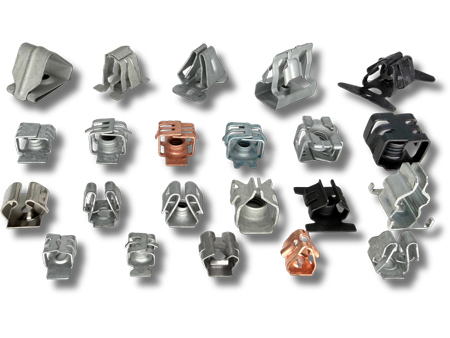
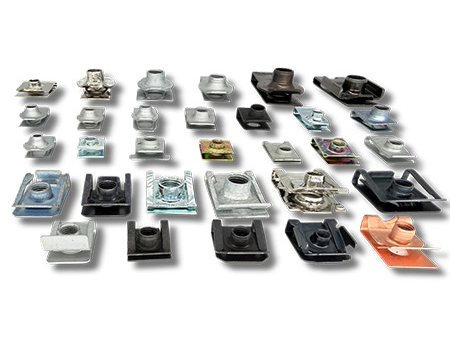
Clip nuts, single-thread U-nuts, and extruded U-nuts can be used to create screw fastening points on thin panels without welding, riveting, or additional tapping. These fasteners are suitable for electronic housings, small covers, internal brackets, and light assembly positions where stable screw fastening and service removal are required.
Edge Holding and Snap-In Assembly
Some electronic equipment requires fastening parts that can be installed directly onto the edge of a panel or housing. These applications often need quick installation, stable holding force, and reduced secondary processing. If the clip does not match the sheet thickness or edge condition, it may become loose, difficult to install, or damage the surrounding surface.
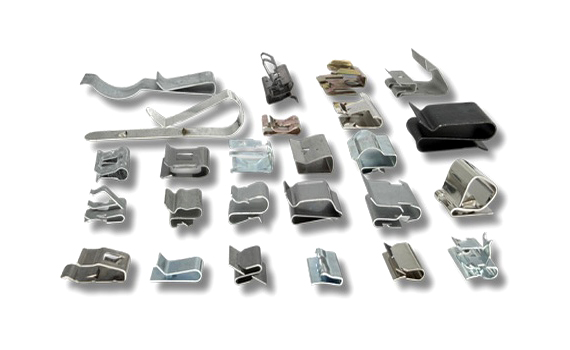
Edge clips and fastener clips can support edge holding, snap-in fixation, light-load positioning, and small component retention. They are suitable for internal panels, covers, brackets, wire-related supports, and other positions where welding or riveting should be avoided.
Internal Bracket and Module Fixation
Internal brackets, control modules, small support plates, and removable components often require stable fastening while allowing tolerance during assembly. When hole position or assembly direction varies, a fixed thread position may cause screw alignment issues or inconsistent fastening performance.
Floating nut plates, clip nuts, and U-nut structures can help improve assembly flexibility by providing stable thread engagement or limited tolerance compensation. These solutions are suitable for internal module mounting, support brackets, removable parts, and assembly points that may require repeated installation and removal.
Grounding, Contact, and Light-Load Retention
In electronic equipment, some fastening points may also need to support grounding contact, conductive contact, shielding-related contact, or light-load retention. In these applications, the fastener is not only used for mechanical fixing, but may also need to maintain stable contact pressure or surface contact condition.
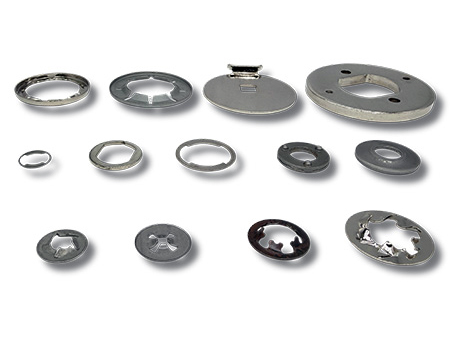
Fastener clips, edge clips, washers, and custom stamped parts can be reviewed according to the actual contact requirement. Material, hardness, spring performance, surface treatment, and coating thickness should be considered carefully because they may affect contact stability, conductivity, corrosion resistance, and assembly performance.
Custom Review for Non-Standard Fastening Requirements
Not every electronics fastening point can be solved by a standard part. Some designs may require a special height, compact shape, specific clamping force, special screw engagement, or customized stamped geometry due to limited internal space or unique product structure.
MSf can review customer drawings, samples, or 3D files to evaluate whether a standard fastener can be used or whether a customized stamped part is more suitable. Deep drawn stamped fasteners, custom washers, special clips, and modified U-nut structures can be considered according to the actual assembly condition.
Testing and Documentation Support
Fastener performance should be confirmed not only by dimensions, but also by actual assembly behavior. Depending on the project requirement, MSf can support screw assembly testing, torque testing, pull-out testing, retention checking, dimensional inspection, and surface treatment inspection.
Quality documents such as inspection reports, material certificates, surface treatment reports, RoHS / REACH related documents, and other customer-required documents can also be supported when applicable. These documents help customers confirm that the fastening parts are suitable for production and project control requirements.
Material, Surface Treatment, and Production Review
Material and surface treatment selection can directly affect fastening performance in electronics assembly. Carbon steel, stainless steel, spring steel, and other materials may be considered according to strength, elasticity, conductivity, corrosion resistance, appearance, and cost requirements.
Surface treatments such as zinc plating, nickel plating, tin plating, phosphate, black finish, or other specified finishes should also be reviewed based on the application environment. For threaded or screw-engaged parts, coating thickness may affect thread clearance and assembly performance. For contact-related parts, surface treatment may also affect conductivity and contact stability.
Discuss Your Electronics Fastener Requirement
Every electronic device has different fastening conditions. Plate thickness, hole size, screw size, installation direction, removable requirements, contact requirements, surface treatment, and production volume can all influence the most suitable fastening solution.
MSf supports customers in reviewing the actual assembly requirement and selecting or customizing suitable stamped fasteners for electronic devices, equipment enclosures, control modules, internal brackets, removable covers, small panels, grounding points, and light assembly positions. Please provide the drawing, sample, or assembly information, and MSf will help evaluate the suitable fastening solution for your application.
- Related Products
Extruded U-Nuts
Professional Extruded U-Nuts — Integrating Localized Drawing and Multi-Stage Forming for Automotive Sheet Metal and Plastic Panel Assembly. Our U-nuts...
Details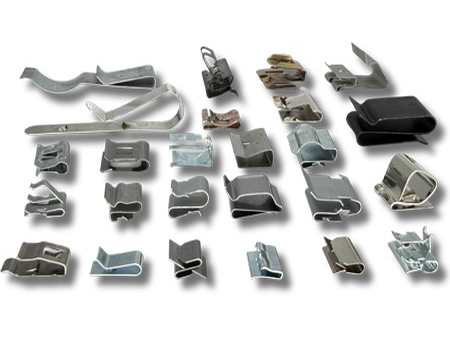
Edge Clips
Our edge clips are expertly engineered for various enclosures, panel borders, and wire routing applications. Utilizing advanced precision stamping and progressive...
Details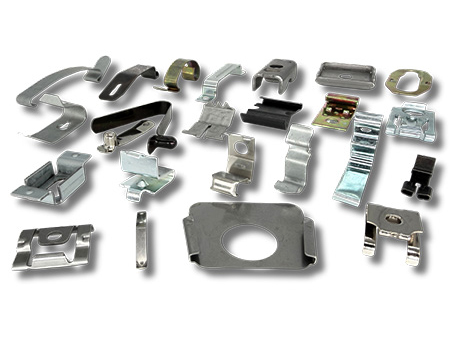
Fastener Clips
Our fastener clips are meticulously designed for various enclosures, panel interlocking, and wire management applications, aiming to provide a completely...
Details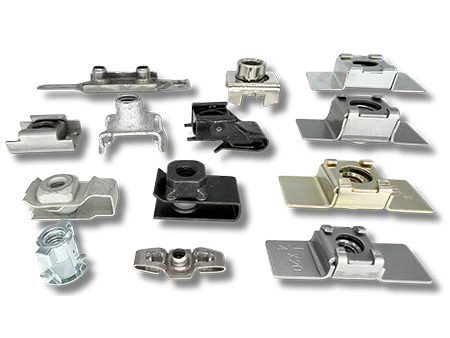
Floating Nut Plates
Our nut plate series is engineered for structural interlocking and heavy-duty applications where cumulative assembly tolerances occur. To meet diverse...
Details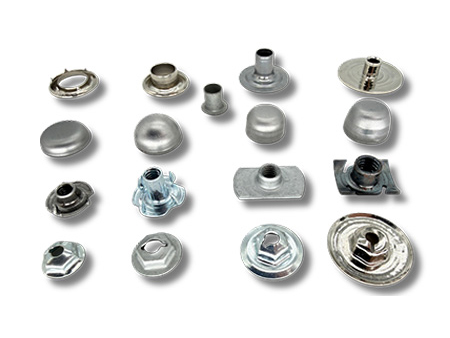
Deep Drawn Stamped Fasteners
Our deep drawn fasteners are engineered for industrial applications requiring high structural rigidity and precise sealing. Utilizing advanced deep drawing...
Details