Agricultural Machinery Applications
Stamped Fastener Solutions for Equipment Covers, Brackets, Guards, and Panel Assembly
Fastening parts used in agricultural machinery are usually small, but they often affect whether equipment covers, guards, brackets, panels, and service points can be installed efficiently, locked securely, removed for maintenance, and kept stable under vibration and outdoor working conditions.
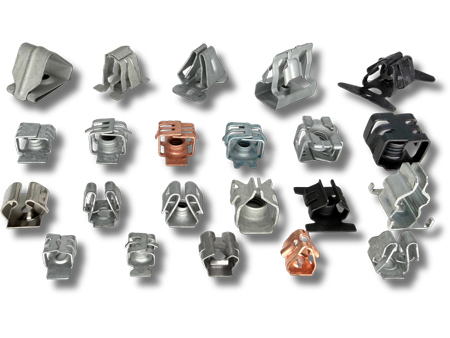
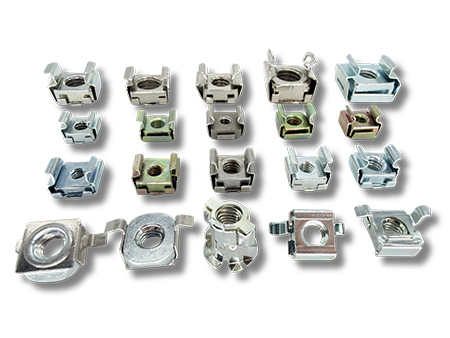
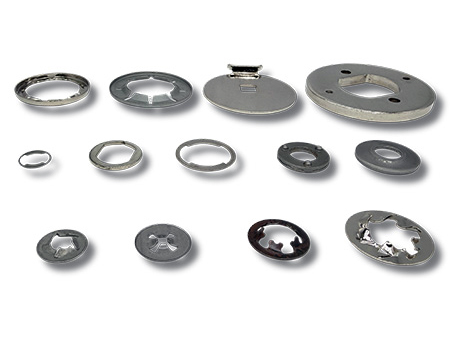
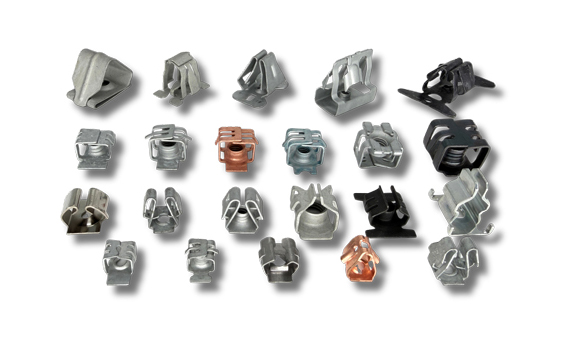
For agricultural equipment covers, protective guards, removable panels, sheet metal brackets, edge fixing points, wire supports, and small mounting areas, MSf provides metal stamped fasteners that can be selected or customized according to the actual assembly condition. Clip nuts, U-nuts, cage nuts, floating nut plates, edge clips, fastener clips, and washer-type fasteners can help create reliable fastening points without relying only on welding, tapping, or additional secondary processing.
Instead of treating fasteners only as standard parts, MSf reviews how the fastening point will be used in the equipment. Plate thickness, hole size, edge condition, assembly direction, screw engagement, clamping force, vibration, service removal, material, and surface treatment all affect whether the fastening design is suitable for agricultural machinery production and long-term use.
Common Fastening Challenges in Agricultural Machinery Applications
In agricultural machinery applications, fastening problems are often affected by vibration, outdoor exposure, repeated service removal, and the actual condition of sheet metal parts. A fastener may look simple on the drawing, but its performance can be influenced by plate thickness, hole tolerance, edge condition, screw engagement, assembly direction, surface treatment, and the working environment of the equipment.
For equipment covers, protective guards, removable panels, sheet metal brackets, edge fixing points, wire supports, and small mounting areas, the fastening design must support efficient installation, stable locking, and convenient maintenance. If the fastener is not matched to the actual assembly condition, it may cause difficult screw alignment, unstable clamping force, insufficient thread engagement, loosening under vibration, part damage during removal, or corrosion concerns after long-term outdoor use.
Before moving into production, the following points should be reviewed:
● Whether the fastener can be installed smoothly under the actual assembly condition
● Whether the plate thickness, hole size, and edge condition match the fastener structure
● Whether the screw engagement is sufficient for stable locking and repeated removal
● Whether the fastening point can support vibration-prone equipment applications
● Whether the fastener can be removed for service without damaging the surrounding component
● Whether the surface treatment is suitable for outdoor exposure, moisture, soil, or agricultural working environments
● Whether material hardness, clamping force, torque performance, or other mechanical requirements need to be verified
● Whether inspection reports, material certificates, or quality documents are required for the project
MSf supports these evaluations through metal stamping experience, fastener design review, mechanical performance testing, material and surface treatment suggestions, quality documentation, and mass-production control.
Fastener Selection by Installation Requirement
Equipment Covers and Protective Guards
Agricultural machinery often uses equipment covers and protective guards around moving parts, belts, brackets, and service areas. These covers must be fixed securely during operation, but they may also need to be removed during maintenance or inspection.
Clip nuts, extruded U-nuts, single-thread U-nuts, and cage nuts can help create practical fastening points on sheet metal covers and guards. Depending on the plate thickness, screw size, hole design, and removal requirement, MSf can suggest a suitable fastener structure to improve installation efficiency and reduce the need for welding, tapping, or additional secondary processing.
Removable Panels and Service Access Points
Service panels and removable covers are common in agricultural equipment because the machine may need regular inspection, cleaning, repair, or replacement of internal parts. For these positions, the fastener must provide stable screw engagement while allowing repeated assembly and removal.
Cage nuts, floating nut plates, clip nuts, and U-nuts are suitable options when the assembly needs a replaceable or accessible threaded fastening point. For applications with hole tolerance or alignment concerns, floating structures can help compensate for slight position variation and make screw installation smoother during assembly or maintenance.
Sheet Metal Brackets and Mounting Points
Agricultural equipment may include various sheet metal brackets for supporting covers, guards, lighting parts, sensors, handles, small structural parts, or internal components. These mounting points may not always carry heavy structural loads, but they must remain stable under vibration and repeated use.
Extruded U-nuts, clip nuts, floating nut plates, and washer-type fasteners can be considered depending on the required clamping force, screw engagement, and installation direction. MSf reviews the bracket thickness, hole condition, screw specification, and assembly method to help determine whether a standard fastener can be used or whether a customized stamped fastener is more suitable.
Edge Fixing, Wire Support, and Auxiliary Retention
Many agricultural machinery assemblies require small fixing points for wire routing, tube support, edge retention, protective covers, and auxiliary components. These positions often need fast and simple installation without adding complex processing to the main sheet metal part.
Edge clips, fastener clips, trim clips, and washer-type fasteners can be used for edge fixing, light retention, and small component support. These fasteners can help reduce assembly steps, improve production efficiency, and provide a practical fixing method when welding, riveting, or additional holes are not preferred.
Custom Review for Non-Standard Fastening Requirements
Not every agricultural machinery application can be solved by a standard fastener. Plate thickness, hole location, screw size, installation space, assembly direction, removal frequency, and surface treatment may all affect the final fastening performance.
For non-standard fastening requirements, MSf can review the customer’s drawing, sample, assembly condition, and performance expectations to evaluate whether an existing product can be selected or whether a customized stamped fastener should be developed. Deep drawn stamped fasteners, special clip structures, customized U-nuts, or modified fastening features may be considered depending on the actual application.
Testing and Documentation Support
For agricultural machinery projects, fastening performance may need to be confirmed before mass production. Depending on the product design and customer requirement, mechanical testing can help verify whether the fastener is suitable for the intended assembly condition.
MSf can support dimensional inspection, hardness checking, torque-related review, clamping force evaluation, pull-out or retention force testing, and other functional checks according to the fastening requirement. When required, MSf can also provide inspection reports, material certificates, surface treatment records, and other quality documents to support customer approval and production control.
Material, Surface Treatment, and Production Review
Agricultural machinery is often used in outdoor environments where moisture, soil, vibration, and corrosion risks must be considered. Material selection and surface treatment are important factors that affect the durability, appearance, and assembly performance of the fastener.
MSf can help review suitable material options, hardness requirements, plating or coating selection, and the possible influence of surface treatment thickness on thread clearance and screw assembly. Before production, MSf also reviews manufacturability, tooling feasibility, inspection points, and mass-production stability to reduce potential risks during assembly.
Discuss Your Electronics Fastener Requirement
Each agricultural machinery application may have different fastening conditions. Equipment covers, guards, panels, brackets, edge fixing points, and service access areas may require different fastener structures depending on the plate thickness, hole design, screw size, vibration condition, and removal requirement.
If you are reviewing a fastening point for agricultural machinery, MSf can help evaluate the assembly condition and suggest a suitable metal stamped fastener solution. By combining product selection, customized stamping experience, testing support, material review, and surface treatment suggestions, MSf helps customers develop fastening designs that are practical for production and reliable for long-term use.
- Related Products
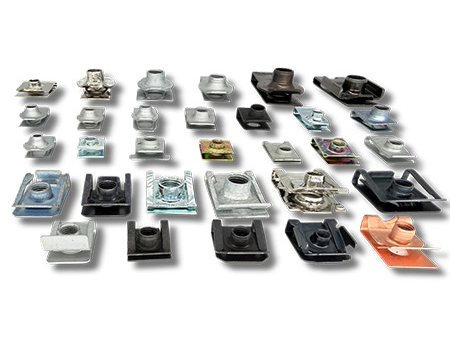
Extruded U-Nuts
Professional Extruded U-Nuts — Integrating Localized Drawing and Multi-Stage Forming for Automotive Sheet Metal and Plastic Panel Assembly. Our U-nuts...
Details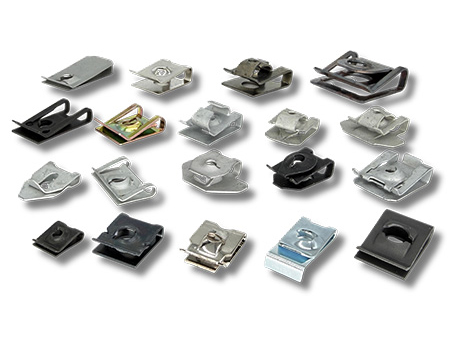
Single-Thread U-Nuts
Our single-thread U-nuts are specifically engineered for general machinery enclosures, industrial control panels, and automotive protective shields requiring...
Details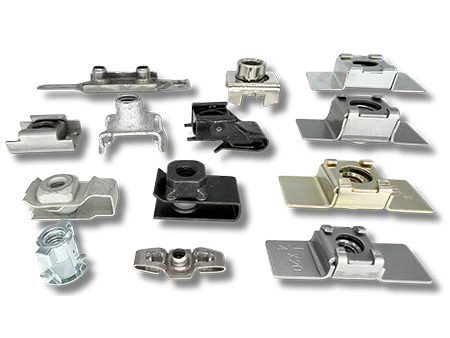
Floating Nut Plates
Our nut plate series is engineered for structural interlocking and heavy-duty applications where cumulative assembly tolerances occur. To meet diverse...
Details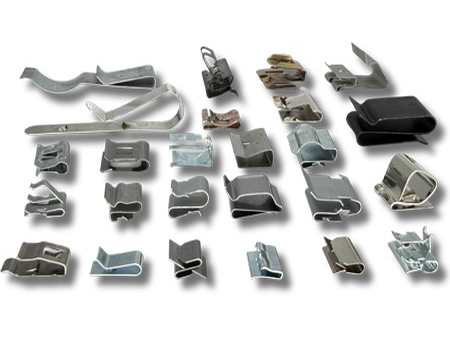
Edge Clips
Our edge clips are expertly engineered for various enclosures, panel borders, and wire routing applications. Utilizing advanced precision stamping and progressive...
Details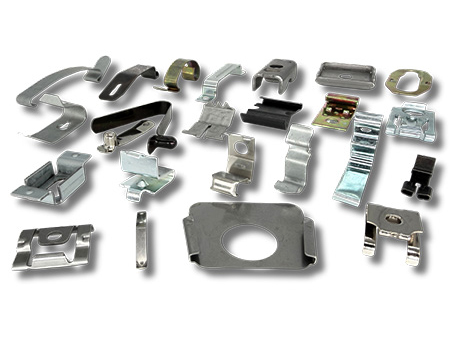
Fastener Clips
Our fastener clips are meticulously designed for various enclosures, panel interlocking, and wire management applications, aiming to provide a completely...
Details